In an increasingly competitive global marketplace, industrial efficiency, structural speed, and repeatability dictate which plants scale profitably and which fall behind. Today, adopting robotic integration and programming is no longer a luxury for forward-thinking facilities—it is a core operational requirement. For Operations Directors, Factory Owners, and Plant Expansion Planners managing capital expenditure (CapEx) investments, transition toward automation demands a strategic roadmap. By seamlessly blending articulate industrial robot manipulators into existing workflows, modern facilities eliminate production bottlenecks, stabilize overall operational expense, and achieve remarkable throughput precision.
To achieve continuous shop-floor success, modern plant architects must align complex physical machinery with software controls. Successfully implementing robotic integration and programming ensures that hardware, programmable logic controllers (PLCs), computer vision, and end-of-arm tooling operate in perfect synchronization. Beyond simply placing dynamic robots on the factory floor, high-yield automation requires holistic systems engineering. This comprehensive technical guide unpacks real-world applications, structural advantages, ROI calculation methodologies, and execution steps to ensure your plant upgrades deliver immediate payback and sustainable competitive advantage.
1. The Core Architecture of Industrial Robotic Systems
Modern production environments demand adaptive engineering frameworks. To fully appreciate how industrial automation converts throughput capacity, it is essential to analyze the structural foundation of industrial robotics systems. Rather than operating as isolated workcells, modern robotic cells function as interconnected hubs within the broader industrial Internet of Things (IIoT) ecosystem.
Key Components of an Integrated Robotic Workcell
- Robotic Manipulators: Multi-axis articulated arms, SCARA, Cartesian, or Delta robots tailored for load capacities, reach constraints, and positional accuracy tolerances.
- End-of-Arm Tooling (EOAT): Custom pneumatic grippers, vacuum arrays, servo-driven clamps, or specialized welding torches designed around specific workpiece geometry.
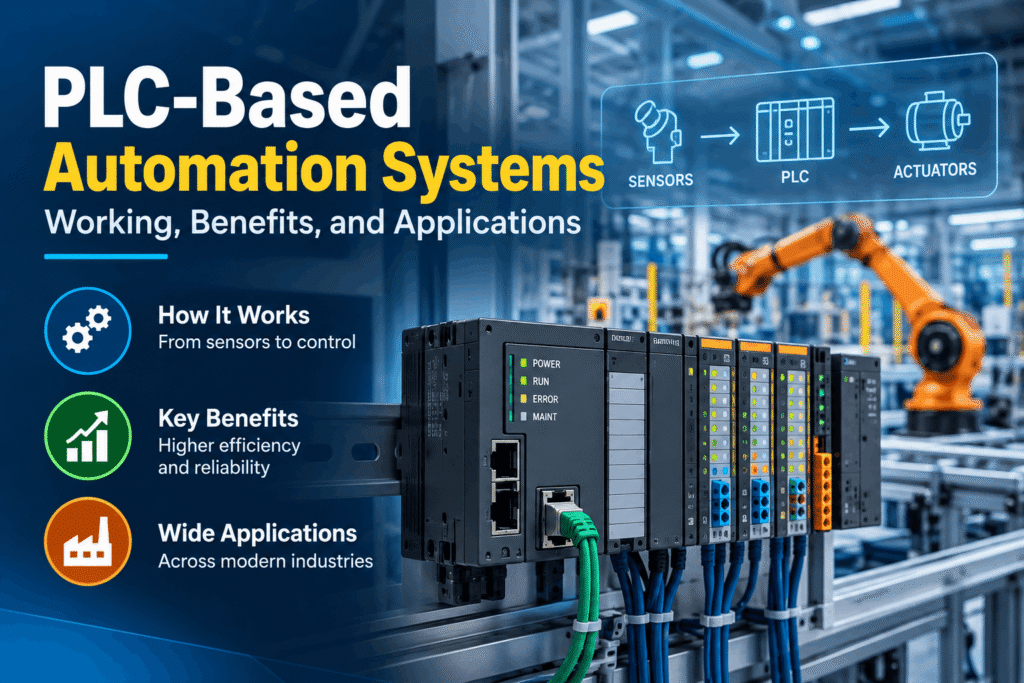
- Programmable Control Hardware: Master PLCs and dedicated robot controllers managing deterministic execution through real-time communication protocols such as EtherCAT, PROFINET, or Ethernet/IP.
- Perception Systems: 2D/3D vision cameras, laser profilometers, and tactile sensors providing dynamic calibration and real-time defect identification.
- Safety & Enclosure Infrastructure: Interlocked physical fencing, safety light curtains, area laser scanners, and dual-check safety (DCS) software routines ensuring human-robot co-existence without sacrificing productivity.
When deploying robotic integration and programming, plant engineers must evaluate how these subsystems communicate. Clean system architecture avoids signal latency, prevents unscheduled downtimes, and maintains consistent cycle times across multi-shift operational schedules.
2. Key Applications Across Modern Industrial Manufacturing
The deployment of automated machinery spans multiple sectors, with dynamic robotics leading the push toward agile manufacturing. Factory planners leverage robotic integration and programming across various specialized disciplines to eliminate human error and achieve high-speed repetition.
Automated Assembly Lines
High-volume manufacturing requires uninterrupted, ultra-precise assembly processes. Integrating industrial manipulators into automated assembly lines optimizes delicate tasks such as electronic component placement, automotive drivetrain sub-assembly, press-fitting, and precision adhesive dispensing. Integrated vision software enables robots to dynamically adjust picking strategies based on component orientation, entirely eliminating line stoppages caused by minor part misalignments.
MIG and Spot Welding Automation
Structural metal fabrication and automotive body-in-white (BIW) production require exceptional structural integrity. Manual welding introduces operator fatigue, thermal distortion variables, and high consumable scrap rates. Through MIG and spot welding automation, robotic arms execute complex multi-pass weld paths with identical voltage control, torch angle maintenance, and wire feed speeds. This consistency produces uniform bead profiles, minimizes weld spatter, and virtually eliminates manual post-weld inspection and grinding.
Material Handling, Palletizing, and Machine Tending
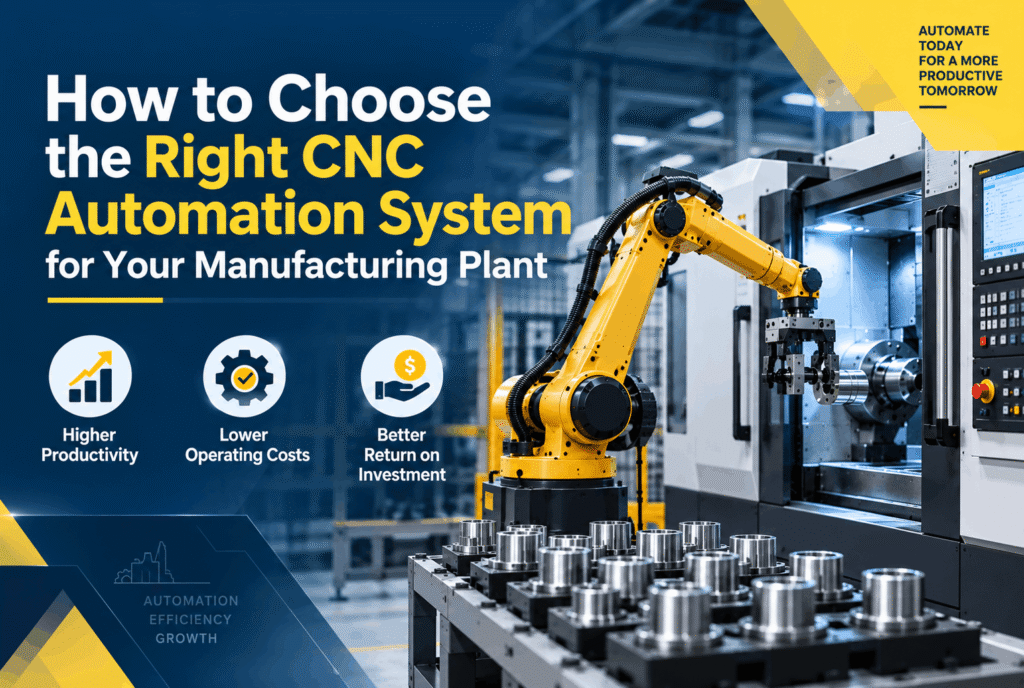
Loading heavy billets into CNC centers, unloading plastic injection molding machines, and palletizing heavy shipping boxes present ergonomic hazards and throughput bottlenecks. Autonomous material handling cells move workpieces with rapid acceleration curves while maintaining sub-millimeter positional repeatability. Furthermore, automated machine tending allows heavy CNC machines to run continuously through meal breaks and overnight shifts (lights-out manufacturing).
Surface Finishing, Deburring, and Polishing
Surface finishing requires consistent force application against complex geometric contours. Force-torque sensor integration allows robotic arms to dynamically adjust applied pressure when deburring castings, polishing turbine blades, or sanding composite panels. This feedback loop ensures uniform surface finishes and prevents excessive material removal, extending tool life and preserving tight dimensional tolerances.
3. Quantifying the ROI of Robotic Integration and Programming
For C-suite executives, Operations Directors, and Expansion Planners, capital expenditure decisions require clear, quantitative validation. Investing in robotic integration and programming is an investment that yields measurable financial and operational dividends over an extended equipment lifespan.
Capital Expenditure (CapEx) vs. Operational Savings
While initial capital investments cover robotic manipulators, custom EOAT, safety barriers, and integration engineering, long-term operational costs plummet following installation. Robotic cells eliminate costly line halts, overtime premiums, and rework cycles.
Comparative Return on Investment & Operational Payback Analysis
| Operational Parameter | Traditional Manual Workcell | Integrated Robotic Workcell | Strategic Financial Impact |
| Shift Availability | 8 – 16 Hours / Day (Breaks Required) | 24 Hours / Day (Continuous Run) | +50% to +100% Capacity |
| Defect Rate & Scrap | 2.0% – 5.0% Variance | Less than 0.1% | Direct Material Savings |
| Cycle Time Repeatability | Operator Dependent (Variable) | Fixed Kinematic Determinism | Predictable Production Output |
| Workplace Injury Risk | High (Repetitive Strain, Heat, Heavy) | Zero Direct Exposure | Lower Insurance Premiums |
| Typical Payback Window | N/A | 12 to 24 Months | Accelerated CapEx Amortization |
4. Unlocking Operational Benefits: Quality, Safety, and OEE
Financial returns stem directly from dramatic operational improvements on the plant floor. Broadly implementing robotic integration and programming drives holistic improvements across every key manufacturing KPI.
Yield Quality and Precision Control
Human operators, regardless of skill level, experience fatigue that introduces minor processing variances. Robotic systems maintain exact path velocities, force applications, and positional accuracy to within fractions of a millimeter. This consistency eliminates part rejection rates and enforces uniform output quality standard across every production run.
Workplace Safety and Ergonomic Risk Mitigation
Removing human operators from hazardous conditions—such as hot welding fumes, high-tonnage stamping presses, toxic paint lines, and heavy overhead lifting—prevents costly workplace injuries. Reallocating personnel from repetitive tasks into higher-value technical operations improves workplace ergonomics, raises morale, and drastically reduces workers’ compensation liabilities.
Maximizing Overall Equipment Effectiveness (OEE)
Overall Equipment Effectiveness measures Availability, Performance, and Quality:
OEE=AvailabilityPerformanceQuality
Robotic cells directly optimize all three factors:
- Availability: Minimal unscheduled downtime due to robust mechanical components and preventive maintenance telemetry.
- Performance: Operations execute at maximum engineered speeds without line slowdowns.
- Quality: Near-zero defect output maximizes top-tier production metrics.
5. Strategic Deployment Framework: From Concept to Commissioning
Executing a successful industrial automation project requires a disciplined engineering roadmap. Failing to follow a structured deployment model can cause integration delays, budget overruns, and shop-floor friction. Partnering with experienced automation experts ensures smooth technical transitions.
Step 1: Feasibility Study and Line Audit
Every automation effort begins with a thorough shop-floor evaluation. Automation engineers analyze material flow, tactile process challenges, upstream/downstream dependencies, floor space footprints, and target cycle times. This phase establishes performance baselines and sets hard CapEx budget boundaries.
Step 2: 3D Kinematic Modeling and Offline Programming
Before cutting metal or ordering hardware, digital twin technology models the proposed robotic workcell in 3D space. Simulation software validates reaching ranges, tool orientations, structural clearance, dynamic payloads, and cycle speeds. Offline programming allows control software to be written and tested virtually, reducing physical on-site commissioning time by over 50%.
Step 3: Hardware Integration and Custom EOAT Fabrication
Once simulations prove viable, engineering teams manufacture structural enclosures, assemble electrical control panels, and fabricate custom End-of-Arm Tooling. Integrating reliable sensors, vision systems, and safety devices ensures the physical workcell functions seamlessly alongside existing plant equipment.
Step 4: PLC Logic Synchronization and Safety Commissioning
A robotic arm relies on continuous master control signaling. Electrical and automation engineers link the robot controller with master PLCs, human-machine interfaces (HMIs), and plant-wide SCADA/MES networks. Concurrently, safety protocols—such as light curtains and safety zone scanners—are commissioned and certified to comply with international safety regulations like OSHA Industrial Robot Safety Standards and ISO 10218 Robot Safety Specifications.
Step 5: On-Site Installation, Runoff Testing, and Team Training
The physical workcell is installed on the plant floor, leveled, anchored, and wired. Engineers execute controlled runoff trials, fine-tuning path routines, vision calibration, and sensor timing under live operational conditions. Finally, plant technicians and operators receive comprehensive training to handle daily operation, rapid tool changeovers, and basic preventive maintenance.
6. Enterprise Scalability: Connecting Smart Manufacturing Solutions
Deploying isolated robotic cells is merely the first step toward complete digital transformation. Modern facilities integrate robotics into comprehensive smart manufacturing solutions, linking edge automation directly with cloud-based analytics, Enterprise Resource Planning (ERP), and Manufacturing Execution Systems (MES).
Real-Time Telemetry and Edge Computing
Modern industrial robots come equipped with integrated thermal, vibration, and current sensors. Passing this telemetry through edge computing devices allows plant managers to monitor real-time joint stress, motor power usage, and mechanical wear. Tracking these variables establishes robust predictive maintenance routines that address wear before catastrophic component failure occurs.
Flexible Manufacturing Cells (FMC) and Rapid Changeover
Modern consumers and industrial buyers demand product customization and short production runs. Modern robotic workcells support rapid changeovers through recipe-driven HMI selections and quick-change EOAT systems. Rather than retooling an entire production line over several days, operators simply select a new product profile on the HMI screen; the robot dynamically updates its path coordinates, grippers, and vision inspection parameters in seconds.
7. Overcoming Common Challenges in Robotic Automation
While the operational advantages of industrial automation are clear, plant managers frequently face implementation hurdles during initial rollout. Addressing these challenges proactively ensures seamless project delivery.
Managing High Initial Capital Outlays
- The Challenge: Initial capital expenditures for high-end articulated arms, custom tooling, and integration engineering can appear daunting to middle-market manufacturers.
- The Solution: Phased deployment schedules allow plants to automate high-bottleneck tasks first. The immediate operational savings from Phase 1 generate capital to fund subsequent automation phases.
Bridging Internal Technical Skill Gaps
- The Challenge: Existing plant personnel may lack experience in advanced robot programming, vision calibration, and fieldbus diagnostic troubleshooting.
- The Solution: Work with automation partners that offer comprehensive post-installation training, intuitive HMI design interfaces, and reliable remote technical support packages. Modern teach pendants feature drag-and-drop programming options that lower learning curves for floor operators.
Integrating Legacy Plant Equipment
- The Challenge: Connecting modern Ethernet-enabled robotic systems with aging, hardwired industrial machinery can create communication barriers.
- The Solution: Leverage modular PLC I/O blocks, protocol converters, and legacy interface modules to bridge communication gaps without requiring total line replacements.
8. Drive Floor-Level Transformation with PAIR Robotics
Successfully implementing advanced automation requires an experienced partner who understands both mechanical precision and software integration. PAIR Robotics delivers complete, turnkey industrial automation engineering engineered around your production targets.
From concept design to final line commissioning, our engineering teams build high-performance robotic cells that eliminate line bottlenecks, enforce quality standards, and maximize operational ROI. Explore our core technical offerings to discover how we transform complex operational challenges into reliable, high-yield production systems:
- Explore custom Automated Assembly Lines engineered for high-throughput precision.
- Learn how our specialized Robotic Integration & Programming capabilities optimize modern manufacturing floors.
- Discover tailored Special Purpose Machines (SPM) built around your specific component geometries.
Ready to evaluate your plant’s operational ROI? Contact the engineering specialists at PAIR Robotics Contact Page today to schedule an on-site technical consultation and request a customized automation proposal.
Frequently Asked Questions (Q&A)
Q1: What is the average payback period for implementing industrial robotic systems?
Most industrial robotic systems achieve full CapEx payback within 12 to 24 months. Payback timelines vary based on daily shift hours, direct labor reallocation savings, scrap reductions, and overall throughput improvements.
Q2: Can robotic integration and programming be implemented on existing legacy equipment?
Yes. Modern automation engineering connects sophisticated robotic cells with older machinery using intermediate PLCs, standard industrial communication gateways, and custom fieldbus interfaces.
Q3: What is the primary difference between articulated robots and SCARA robots?
Articulated robots feature 5 to 7 rotary axes, offering high range of motion for complex tasks like welding, painting, and 3D machine tending. SCARA robots feature 4 axes operating on a fixed horizontal plane, making them ideal for high-speed pick-and-place, sorting, and small part assembly operations.
Q4: How does machine vision enhance robotic workcell efficiency?
Machine vision systems act as the visual guide for the robot arm. They allow the manipulator to locate, identify, and pick parts randomly arranged on conveyors, verify dimensional tolerances, and perform real-time surface quality inspections without stopping the line.
Q5: How do automated MIG and spot welding systems maintain consistent weld quality?
Automated welding systems control arc voltage, wire feed speed, torch trajectory, and travel speed with absolute mathematical precision. Eliminating human variance prevents weld porosity, uneven bead penetration, and thermal part distortion.
Q6: What maintenance is required for integrated industrial robotic arms?
Routine preventive maintenance involves checking joint gearbox lubrication, inspecting timing belts, validating safety system stops, cleaning optical sensors, and backing up controller software. Scheduled annual inspections ensure high positional repeatability and prevent unexpected downtime.
Q7: How long does a typical robotic cell installation and commissioning project take?
Project timelines generally range from 8 to 16 weeks, depending on cell complexity, custom EOAT requirements, offline simulation testing, and shop-floor integration requirements.
Q8: How does PAIR Robotics assist manufacturers during their initial transition to automation?
PAIR Robotics provides end-to-end support—including feasibility studies, 3D kinematic simulation, custom machinery design, PLC programming, physical installation, and comprehensive post-launch operator training.